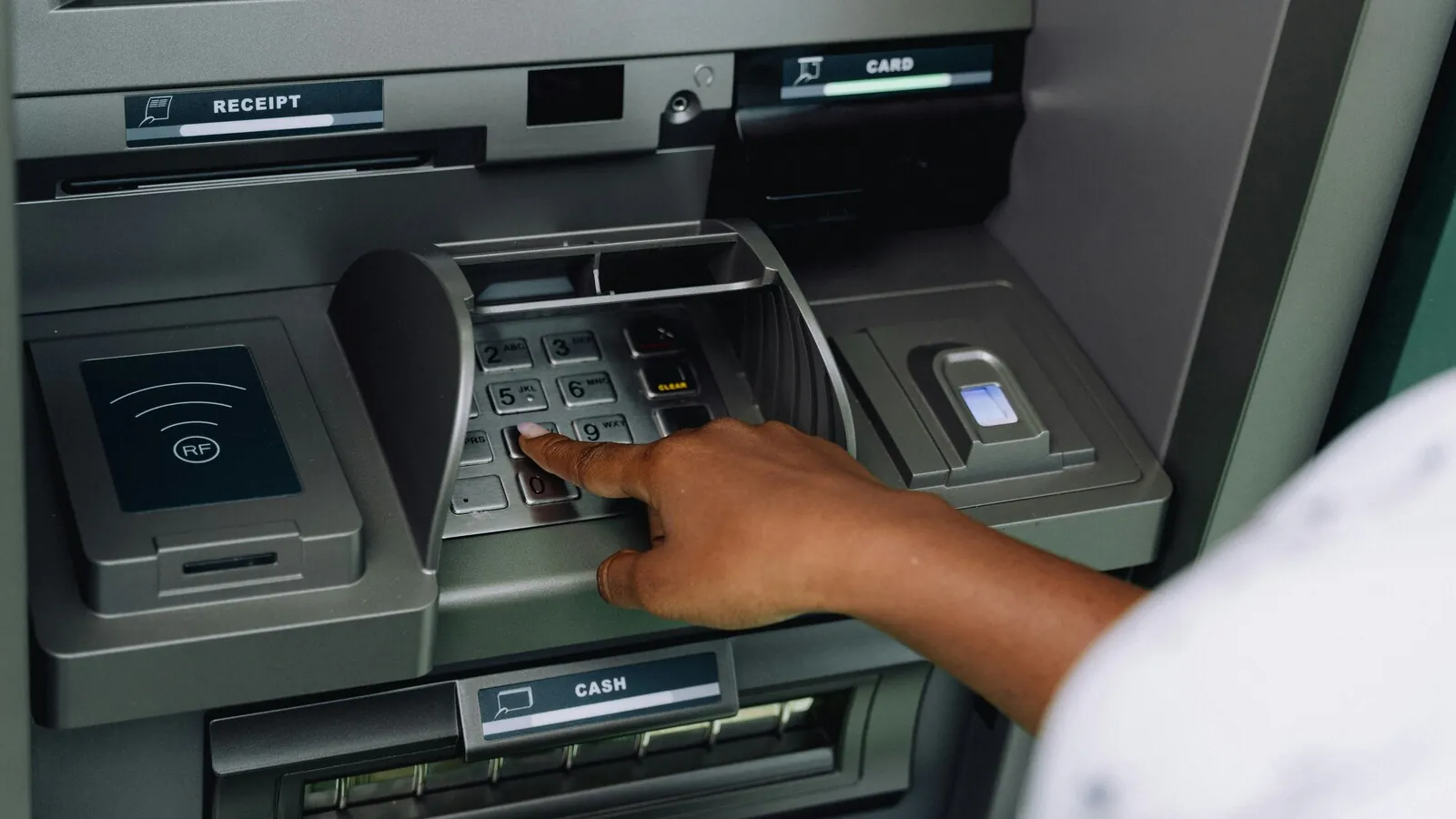
Some ATMs, the newer ones mostly, return your card before they hand over the cash. The first time it happened to me, it felt backwards. I came for the money, so why was the machine handing back the thing I had already mentally filed away? That flicker of friction is the entire point. What reads as a sequencing quirk works as a deliberate behavioural fix, and once you recognise the mechanism, you start seeing the same move in software, hardware, and physical spaces everywhere. Everything here concerns the card-retaining machines, the ones that pull your card inside and hold it until the transaction ends, not dip or tap readers.
The problem: people walk away without their cards
The conventional sequence made sense on paper: finish the transaction, take the cash, take the card. The trouble is that it runs against how attention works the moment a goal is met. Once the cash is in hand, the remaining step drops out of working memory.
This has a name in human-factors research: a post-completion error, the small trailing action people skip after the main task feels finished (Byrne and Bovair, 1997). Walking away from the photocopier with your copies but leaving the original on the glass is one. Driving off with the fuel cap sitting on the roof is another. Forgetting the card at the ATM is the same failure, and an expensive one: cards get retracted, collected by staff, or picked up by whoever uses the machine next.
The fix: card first, cash second
The card-first design doesn't ask anyone to be more careful. It changes the order so the easy-to-forget step happens while attention is still engaged, before the cash arrives and completion mode sets in.
Two versions of this exist, and the distinction matters. Plain card-first sequencing (return the card, then dispense the cash a beat later) reduces forgotten cards but doesn't eliminate them. The stronger version withholds the cash until the card has been physically removed, turning "remember your card" from a request into an enforced sequence. Only the gated design closes the failure rather than making it less likely.
Either way, this is Nielsen's fifth heuristic made physical: prevent the error instead of helping users recover from it (Nielsen Norman Group, 1994). The gated version is the forcing function Don Norman describes: a constraint built into the sequence itself that makes the correct order the path of least resistance (Norman, 2013). No warning screen, no reminder text, no audio prompt. The order does the work.
Why sequence beats instruction
The older fixes were instructional: a warning on screen, a beep, a line printed on the receipt. They share one weakness: they depend on the user having spare attention at the exact moment it's scarcest. When the cash appears, focus narrows to the reward, and a message on a receipt is competing with money in hand. It loses.
Reordering the steps removes the dependency on attention. There's no reminder to miss, because there's nothing left to remember. Thaler and Sunstein call this choice architecture: arranging the environment so the good outcome is the default rather than something the user has to actively get right (Nudge, 2008). A behaviour problem can often be solved by changing the sequence or the environment, not by adding copy that asks people to behave.
The security payoff
A card abandoned in a slot can't be drained at that machine without the PIN. The real exposure is contactless: a found card can be tapped at a terminal with no PIN, up to a per-tap limit that varies by network, issuer, and country (as high as CAD $250 at participating Canadian institutions, £100 in the UK, with US issuers setting their own thresholds). Several taps can clear before anyone notices the card is gone. Card-first design closes the specific window where a card sits forgotten in the machine; it can't stop a card being lost elsewhere. Do the usual protections cover what slips through? Mostly, and after the fact: zero-liability policies in Canada and the UK generally reimburse unauthorised contactless charges on a lost card, though reimbursement can depend on reporting the loss promptly, and the cardholder still absorbs the disruption of noticing, cancelling, and replacing the card. Prevention removes the whole episode rather than refunding it. The protection arrives as a by-product of the order, not as a feature layered on top.
What it costs, and why it's worth it
Card-first isn't free, and most write-ups skip this. It swaps a familiar habit for a safer one. That backwards feeling is real friction, and it's likely part of why the change has spread slowly across machine fleets that would need hardware and firmware updates to support it. Forcing functions always add a little rigidity: removing a path can irritate the users who never needed the guardrail.
The reason it nets out positive is the ratio. The cost is a one-time moment of mild surprise. The thing it prevents, a lost card and a possible chain of contactless fraud, is far more expensive than that surprise. That trade is the actual design judgment, and it's the part worth carrying into other decisions: a forcing function earns its rigidity only when the error it blocks is both costly and common enough to justify constraining everyone.
The takeaway
The card-first ATM is one of the clearer real-world cases of designing for how people behave rather than how we wish they would. It doesn't lecture inattentive users or pile on warnings. It rearranges the steps so the costly mistake has nowhere to happen, and it accepts a small, deliberate cost to buy that. Before writing another tooltip or error message, the better question is whether the sequence itself can change so the mistake stops being possible.
Sources
- Byrne, M. D. and Bovair, S. (1997). A Working Memory Model of a Common Procedural Error. Cognitive Science, 21(1).
- Nielsen, J. (1994). 10 Usability Heuristics for User Interface Design. Nielsen Norman Group.
- Norman, D. (2013). The Design of Everyday Things (Revised ed.). Basic Books.
- Thaler, R. and Sunstein, C. (2008). Nudge: Improving Decisions About Health, Wealth, and Happiness. Yale University Press.
- Interac. Interac Debit contactless payment limits (up to CAD $250 at participating financial institutions).
- Financial Conduct Authority. Guidance on contactless card payment limits.